When Viewing Examples of Student Work:

Often a single example of work may not demonstrate all the required objectives for a particular assignment. Instead students should collectively consider: the required objectives for each assignment, the multiple examples presented on this blog and during in class presentations. As well ideas discovered through a student's independent research in combination with various examples and ideas presented by instructor will ultimately be the best approach for synthesizing ideas and reaching the requirements (and unique outcome) for any particular course project.

Sunday, January 29, 2012

Thematic B & W Interior/Exterior Assignment

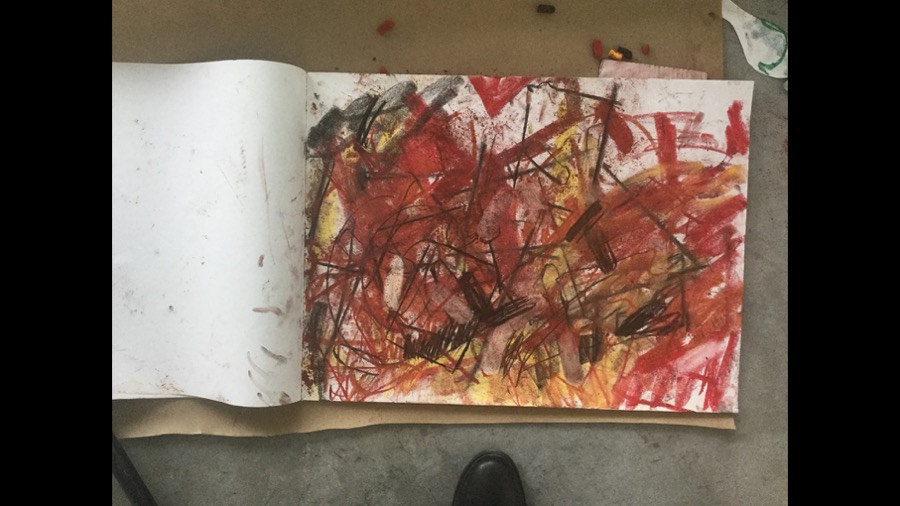
oil pastel          24 x 18 inches
Drawing Studio 1 course


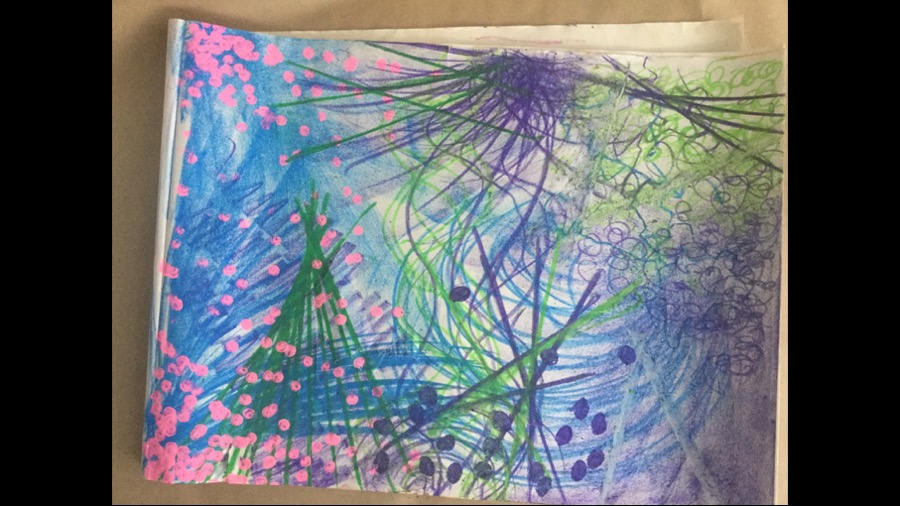
 acrylic and ink       18 x 24 inches
Drawing Studio 1 course


black and white conte      24 x 18 inches
Drawing Studio 1 course

Thursday, January 20, 2011

21 Items/Elements Exterior Assignment


This assignment is about doing a drawing involving a landscape that includes a narrative or metaphorical narrative depicting the list of elements (listed below) from your imagination. The drawing can be as realistic or surreal as people wish provided the work presents a narrative with layered thematic content that is unique. Consider details, specific characteristics and contexts for each item/element to make your narrative unique. This assignment is about being given specific parameters and demonstrating the ability to be innovative and unique within those specific parameters.

The examples below do not address all the objectives of the assignment but are very good examples to consider. As in all assignments the goal is to have an original, unique and ambitious work when completing the objectives of the assignment.

Out of the list below you are required to depict the following 21 elements into you work:

1) House with one window that allows the viewer to see inside the house.

2) Cityscape or mountain range on the horizon in the background to suggest deep space in the picture.

3) Sculpture

4) Person riding their bike, skateboard, or rollerblading

5) Road

6) Fence

7) Shed or outhouse with entrance open allowing the viewer to see inside

8) Two people inside or outside who own/rent the house (these two people are in addition to the person riding their bike, skateboard or rollerblading)

9) Car

10) Boat, kayak or canoe

11) Flowers

12) 6 birds

13) Performance artist (historical or created)

14) Clothes line with clothes that signify the couple that are living in the house.

15) Garbage can and recycling container

16) Grass

17) River or stream

18) Tree

19) Bill board

20) Lawn furniture

21) Tunnel entrance in the landscape that connects to road

Check course syllabus for due date of this assignment.


Monday, January 10, 2011

Final Drawing Assignment

The following assignments are suggestions meant to serve as a guide. This list is not inclusive. You may wish to work on one assignment or combine ideas of various assignments. See assignments1-6 listed below.

Projects may include a choice of: one large work (3 x4 feet) or a series, or an installation, or performance, etc. All work must include studies or small preliminary works. Half a letter grade will be deducted if studies/small preliminary works are not included in working process.

Some of the assignments listed below (1-6) relate to drawing materials that are more traditional. Some assignments will emphasize formal aesthetics more than others. While other assignments below will also encompass a greater emphasis towards concept and or expanding definitions/ideas of what a drawing can be in terms of contemporary art. The most important concern or main objective is that all projects should demonstrate drawing(s) and primarily colour drawing materials in relation to contemporary ideas. 

Exceptions to using primarily drawing materials are negotiable if a proposal is made in advance. 

Generally speaking contemporary ideas should have layers of meaning and the work should have an over all synthesis of formal and conceptual (thematic) ideas.

Students should have an initial consultation with instructor, followed with consultations periodically through out the process of the project to ensure that enough work is done and objectives of final project are addressed. As well there should be an in class dialogue with class peers regarding work. (As usual positive in class participation is expected).

Sunday, January 9, 2011

Thematic and Final Projects from Fundamentals of Drawing and Drawing Studio 1 & 2 Courses (Foundations/ First Year BFA courses)

João Antonio Monteiro
Untitled
Varnish on Burned Wood
April 2009

Course: Fundamentals of Drawing
Assignment: Final Project
Institution: School of Art, University of Manitoba
Term: Winter 2009


The above work references a story (narrative) that is conveyed through a text that progressively transforms from one language to another. The author of the above work is multi-lingual and is personally connected to most of the cultural references in the work. A narrative is presented to the viewer (audience)  which inevitably is fragmented if the viewer is not multi-lingual. 

Historically many of these cultures presented above have been colonized. Perhaps the work references the loss of language and culture due to colonization. Is the author turning the tables on the colonizing mono-culture? Is this work about the author who is struggling or coming to terms with his identity of being  partially familiar with many cultures but never completely belonging exclusively (fitting in) to a single culture? How does the materials/mediums used in the above work fit in with the over all theme of the work?


Amelia Marshall
Untitled
Mixed Media
April 2009

Course: Fundamentals of Drawing
Assignment: Final Project
Institution: School of Art, University of Manitoba
Term: Winter 2009


video


The above work addresses issues of masculinity and gender in a kind of sarcastic/satirical way. Are traditional gender roles just social constructions that need to be challenged or subverted?


The above work again addresses issues of gender. Through out history female nudes have been shown as bathers before or after the act/ritual of washing. This history cycle is disrupted and is given an alternative with a older male nude figure in the act of clipping his toe nails which we presume is after the bath/shower. The over life size figure and multiple view points perhaps is alluding to issues of different social perspectives and interpretations by various individuals. With this large scale the work also relates to the history of the monumental figure.


The above thematic project has dual layers in terms of a map and eye being referenced in the same image. The red lines simultaneously convey blood shot veins in the eye and roads on the map. 


Drawing with Sound
A drawing and small containers of ink are placed on top of a guitar amplifier. Vibrations of sound cause small containers filled with coloured ink to shake and move around on the paper of a drawing. Traces of coloured ink are left where the containers have moved and vibrated along the paper.


Dustin Horrock
Digital Print and Suspended Red Gel
April 2002

Course: Fundamentals of Drawing
Assignment: Final Project
Institution: School of Art, University of Manitoba
Term: Winter 2002

Thematic Assignment (Symbolism and Metaphor Assignment)

Drawing and Art Making with Symbolic/Metaphorical Content

Assignment will be worked on in class and it is expected that the assignment should be worked on outside of class as well.

Objectives:
Large Drawing (3 x 4 feet) with numerous small studies/preliminary work OR a series of smaller sized drawings with studies/preliminary work that use primarily drawing materials. Note half a letter grade will be lost if studies are not integrated into the process of the work. This means not doing studies at the completion of the assignment. As in previous assignments the “Thematic Assignment” will continue with the formal investigation of various drawing materials, mark making, composition, forms, space and color. Unlike previous assignments this Thematic Assignment places more emphasis on developing and expanding themes that will involve choosing symbols, metaphors, allegories, narratives, icons, signifiers, myths or combining some of these choices. Concept building and expanding thematic layers of meaning in this assignment will become an essential part of the working process.

Primarily drawing mediums are required for this assignment to depict an advanced level of symbolic and or metaphorical subject matter (see points 1 to 8 under Thematic Subject Matter heading). Other non-traditional materials may be used in addition to the primary use of drawing materials. You also have the option of developing collaged drawings and or using text and paint as a partial component in the work as long as the objectives are demonstrated.


Thematic Self Portrait


This assignment will entail emotive drawing in conjunction with thematic subject matter. Students may use visual references (photos and or mirrors) but will rely primarily on their imagination and or memory to depict themselves in metaphorical, symbolic and or allegorical contexts.  The use of icons, motifs and signifiers may also be incorporated into this work. Using these thematic devises students will depict the self in terms of narrative, which may be theatrical, fictional and or involving a personal history. Ultimately the work’s goal is to present the self in a thematically layered manner that is unique and innovative. As in all the assignments for this course there should be a synthesis of aesthetics (formal visual languages) with concepts. Various coloured media of choice will be explored focusing on formal concerns regarding colour, space, mark making, soft and sharp edges, and different levels of detail and sensibilities. 

This project may entail using surrealist approaches, provided the chosen approach does use cliched imagery such as melting clocks (like Dali) and other surrealist work which have been over saturated in popular culture and media. Try to look at contemporary artists who use themes of self in their work in a unique, experimental and conceptually more innovative way than the typical historical surrealist work. Through your research try and think about things and discover concepts that have not ben seen before or have very little circulation in popular culture and media. This project does not just have to be the face, as an option the project may also include parts of or the entire body. As well do consider the use of an environment around (in front and behind in the background) of the subject matter (you) Do you dress up, is the project a fictional/theatrical/fantasy self portrait? Or do you discuss a personal history? Or both?

Using autobiography, dream, confession, fantasy, or other means invent one’s self in a new way, or to evoke the variety of selves in our imagination. Overall the Thematic Self Portrait Assignment experiments with and explores the rich possibilities available to the contemporary artist and their own persona.


Ideas Related to Thematic Self Portrait Assignment:

Martin Kippenberger’s Self Portrait explores the idea of the self as clown, fool, self-deprecating and or challenging notions of the idealized classical nude.

Martin Kippenberger Self Portrait (1988
oil on canvas 200 x 240cm ) View image of work on line at: http://www.saatchi-gallery.co.uk/artists/artpages/kippenberger_Self_Portrait.htm
In Martin Kippenberger’s series of self-portraits from 1988, he pictures himself with a touching lack of vanity. An exaggerated beer belly, folds of fat, a thick neck, and dejected posture present a melancholic, awkward and somewhat grumpy figure. He wears immense white underpants pulled up high on his hips – rather like a well-known photograph of Picasso.

 Icon/Motif:
One example of an art historical Icon or motif such as the Halo that may be integrated into a self portrait or portrait

Standing Buddha with a halo, 1st-2nd century AD (or earlier), Greco-Buddhist art of Gandhara.
http://en.wikipedia.org/wiki/File:Gandhara_Buddha_(tnm).jpeg

Fra Angelico  Virgin and Child with Saints, detail, Fiesole (1428–1430)


Painting 1 Student:  Thematic Self Portrait
School of Art, University of Manitoba

In this student work the artist depicts himself in front of a planetarium background. Is this artist questioning his place and or his indecision among the debates between religion and science? Is he attempting to make a commentary on one’s position and relation within an artificial and simulated environment such as a planetarium?

The above student work presents a very good beginning but as one option for the Thematic Self Portrait Assignment this particular work could have explored the relation ship of the planetarium further by perhaps giving the viewer more information regarding the environment.

Overall the above student work offers a very interesting use of having the globe operate simultaneously as a halo and an object in the background. This subtle reference of a religious motif is a great first step and demonstrates one potential way art students can develop conceptual layers into a class assignment. If an artist researches and begins to investigate various ideas presented in contemporary art practices, the possibilities are endless where an artist can take a work in terms of conceptual layers. For example: what could this artist have done to bring even more conceptual layers into the work?


Starting with Page 10 of PDF on London UK artist/photographer Sam Taylor from link:
http://www.mca.com.au/content/exhibition/1911/SamTaylor-Wood_Education_Kit.pdf


Work by London artist/photographer  Sam Taylor who uses portraiture with themes, metaphors and symbols in her work.


Allegory and Symbolism
Self Portrait in a Single Breasted Suit with Hare   by Sam  Taylor         
Personal events are referenced in the work Self Portrait in a Single Breasted Suit with Hare (2001). This image deals with Taylor-Wood’s experience of living through cancer. The work functions on a highly personal symbolic level. She says, “It was a portrait in a single-breasted suit, as I had breast cancer, with hare, I’ve still got my hair after chemo.”4 The artist resembles an androgynous dandy or a magician in this image. Her gaze directly confronts the viewer’s gaze, as if daring them to confront the miracle of her continuing existence.

In Self Portrait in a Single Breasted Suit with Hare (2001) the artist appears almost like a magician, the cable release cord in her hand revealing the trick of appearing in her own photograph. Of Strings (2003), she says, “I wanted to make the dancer look effortless…yet reveal the workings of my constructed fantasy.”17


Photoshop Assignment

This assignment should demonstrate a thorough exploration of the Photoshop program with out using filters. Consider the imagery and subject matter in terms of thematic content. Be conscious of avoiding cliché imagery and subject matter, which lacks substantial concepts.  Consider digitally collaged work in relation to Abstract and Surreal spaces.  As a component of this assignment integrate traditional drawing materials into the digital process.
The above Photoshop assignment references too much Science Fiction/Fantasy Imagery and requires further development in terms conceptual, thematic metaphorical content but does demonstrate some very good digital collage techniques with a  reasonable sense of space progressing from foreground to background. This work is also demonstrating the use of playing with different levels of opacity in select layers of the work. As well there are different levels of feathered edges in some select images. As well colour saturation and contrast has been both increased and decreased in different selected areas of the picture.


 The four images above demonstrates traditional drawings beginning to be integrated with the digital collage and painting techniques of Photoshop. As well they offer an examples in the use of the selection tools and fill tool. These works demonstrate another technical option for the Photoshop assignment but keep in mind the above examples do not demonstrate any thematic or metaphorical content. Once again please remember that the Photoshop assignment for this class is required to work towards integrating thematic and metaphorical content into the digital picture.


The five images above once again demonstrates traditional drawing integrated with the digital collage and painting techniques of Photoshop. As well they offer a greater use of colour adjusting and use of the transform tools to manipulate scale and/or alter shapes of select images in certain layers of the picture. Once gain the five examples above does not demonstrate any or very little thematic or metaphorical content, but offers a very good example of technical skill with the Photoshop program. 


The above image demonstrates the use of painting and drawing tools used in Photoshop. The above technique is developed by utilizing different brush sizes and various selections of colour.


Monday, May 31, 2010

Eclectic/Pluralist Assignment (formerly The Flatbed Picture Plane Assignment)

ECLECTIC/PLURALIST ASSIGNMENT

Complete one large drawing (3 x 4 feet minimum) with numerous small studies/preliminary works

This assignment in many ways is about trying to combine (and or collage) as many types of styles, images and sensibilities as possible but in a unified manner that is complex and unique.

These styles, images and sensibilities should come from a variety of cultural, historical and contemporary contexts.

The formal objectives of the Eclectic/Pluralist Assignment require a consideration of the objectives from the Pure Abstract Assignment but will also require the additional objectives of synthesizing the broadest ranges possible of imagery, styles and sensibilities.

Image sources in the Eclectic/Pluralist Assignment should include a combinations of all points listed below:

1) representational (realistic) drawing from observation

2) abstraction and mark making (modernist assignment)

3) pop art styles and advertising

4) graphic design and or illustration drawing styles

5) drafted diagrams and or drawn images of objects, or machines, or architecture

6) drawing that interprets media imagery from television, movies, magazines and the internet (interpretation of lens based mediums such as photography, video, and film)

7) drawing styles and images from art history, or folk art or arts and crafts

8) drawing that present imagery and styles of drawing from non western cultures such as Asian, African, South American or Aboriginal cultures


Suggested Drawing Materials:
It is suggested people use the coloured oil bars for this assignment but many other options are also available in conjunction with the oil bars. Drawing materials such as oil or chalk pastels that cover large areas of your drawing quickly and offer good colour and have strong physical presence on the drawing surface allowing for an investigation of mark making will also work as well. Over all you can use all other types of coloured drawing materials for detail work such as coloured pencils, coloured inks and coloured markers, but keep in mind these should not be your primary drawing tools since they do not cover a large area quickly nor do they offer any sort of physicality in terms of the mediums presence or mark making. As well you may use acrylic or watercolour as a base or intermittently as long as the work emphasizes drawing materials. It is recommended that you use a fairly thick paper as your drawing surface. Some people have used canvas in the past but keep in mind the texture of the canvas causes the drawing materials to erode and ware out considerably quicker than if paper was used for a drawing surface. This 3 x 4 feet work can be one large sheet of paper or it may be smaller sheets of paper joined together. Consider how the seems of smaller paper will be integrated into the drawing and or hidden in the drawing.

Studies or Smaller Preliminary Works:
The purpose of the studies is to assist you in the investigation of this assignment. All the objectives do not have to be met in each study but rather should be used to take risks and experiment with to find all the required objectives. The studies are not about making something small and then duplicating that small study at a large scale. Instead the studies and the larger work should feed off each other. During the process there should be a back and forth of working between the studies and the large work (especially at the beginning stages of the drawing) As well studies may include manipulations of digital photos of the large work taken while in progress. In general it is strongly recommended that you photograph the work in progress and periodically make some inexpensive prints at home to work on in order to consider all potential directions to develop the work. Overall experiment and investigate various options thoroughly with the studies and the large work.

Steps of Process to Consider for Developing Drawing(s):
Avoid having every formal and conceptual component of your drawing pre-planned or “figured out” before you begin. This will eventually suffocate any desire to work, because it is almost impossible to pre-plan every step in the process and get positive results.

If you are stuck with no ideas it is best to immediately start drawing with vague ideas and some random organic and geometric shapes such as in some of the examples posted below.

Prepare yourself mentally for a process of: risk, unexpected direction, layering, editing, which includes sacrificing parts in the work, reworking, researching, making small preliminary works, applying criticism, generally experimenting with conviction in your drawing, and you will have a very successful work or series of works.

Optional Reading (Assistance in developing assignment):
Essay: The Flatbed Picture Plane by Leo Steinberg


(Some points may require more than one example while others points may be required in a less significant way)


Detail


Detail


Detail


Detail


Detail


Detail


This work does not meet all the required objectives for the assignment but is using cartoon and illustrations in an interesting way. The imagery is utilizing a unique combination of various scales of similar imagery, variations of opaqueness and transparency, and use of asymmetrical pattern with large linear elements.


Painting 1 Winter 2003


Painting 1 Winter 2003


Basic Design Summer 2006
The above work does not present all of the criteria for the Pluralist Assignment but does demonstrate an interesting combination of abstraction and a pop or cartoon style